 by
by Doors are tricky things. They’re bigger than the average person – they are heavy, clumsy, and they swing violently back and forth with a seemingly malicious intent to maim. And more often than not, a door is the only thing standing between you and your final destination. If you don’t know how to open a door, then you’ll never get anywhere in life.
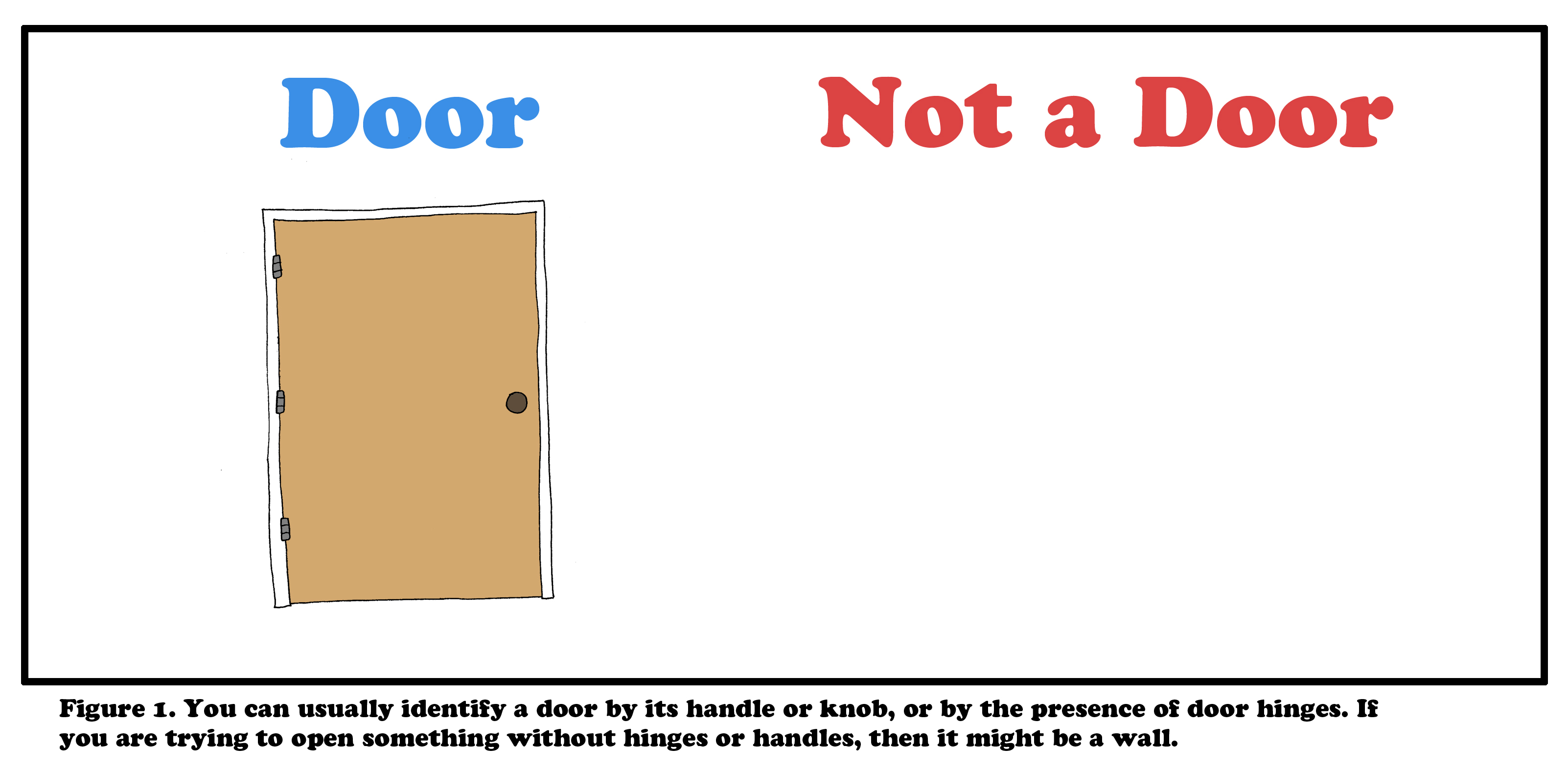
A closed door may at first seem intimidating – but the important thing to remember is that all doors are meant to be opened. If they were not meant to be opened, then they would be called “walls.” That being said, make sure you’re trying to open a door and not a wall – you can distinguish the two by the fact that a door typically has a handle or knob of some kind to facilitate opening (see Figure 1).
Always approach a door with caution – you never know when it will open – and always respect the door and its mechanics. When you approach, speak to it in a calm and soothing voice. Say something like “Hello, door. I am about to open you. I respect you for what you are. I like your fine wood detailing.”
Doors respond favorably to deep baritones – if you have a high-pitched, squeaky voice, then it may be best for you not to speak. Grab the handle or knob firmly in hand and rotate your wrist (if appropriate), all the while pushing or pulling on the door. A door that is receptive to opening will do so – all you then need to do is walk through the opening.
“But how do I know when to push and when to pull?” you ask. Good question.
Sometimes – if the door is without a handle or a knob – there will be a sign or stenciled lettering telling you to “push” or “pull.” This is not a trick – do what the sign says. If there is no such sign – or if you are illiterate – then look for the door hinges and push/pull on the opposite end. If the hinges are on your side of the door, then you should pull – if they are on the opposite side, then you should push.
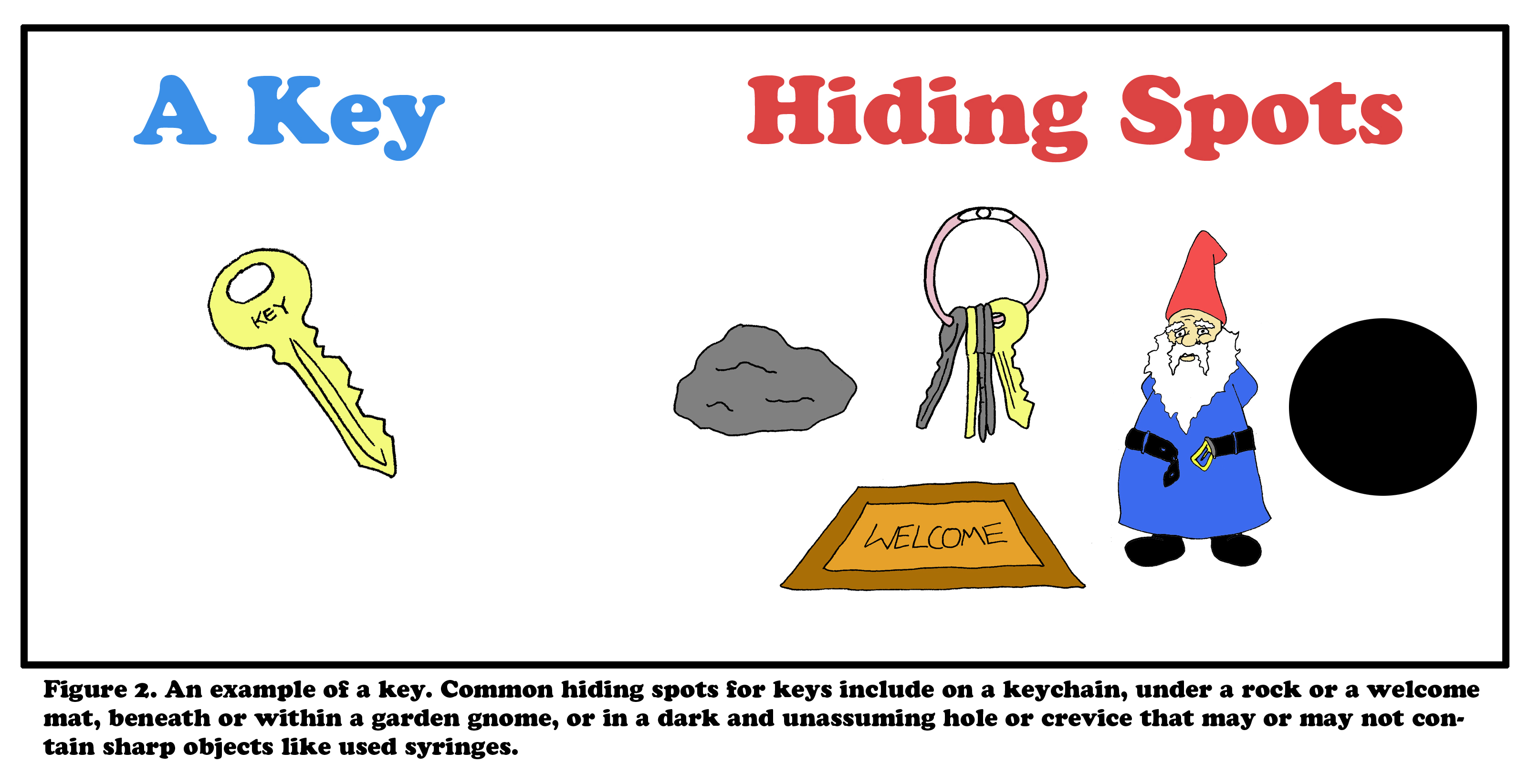
If you’ve tried all of the above and the door still doesn’t open, it may be what experts in the field call “locked.” If this is the case, search your body for a “key.” This is usually a small metal device that – when inserted into the door – will result in its unlocking. You may find the key in your pocket, or on a chain around your neck (see Figure 2).
If you do not have a key, then you have several options. You can wait until someone with a key walks by – but this could take a very long time. A more urgent approach would be to try knocking or banging on the door. If this still doesn’t work, you can try crying. Cry loudly so that someone on the other side of the door thinks you are bleeding profusely or in otherwise severe distress, and opens the door to investigate further.
One last piece of advice – always open the door with your hands, or with your feet if you are flexible. Never open a door with your face.
 One Man's Guide To...
I must say that by and large I am really happy with this web site. After reading your post I can tell you are educated about your writing. Looking forward to future posts. Thanks!