Sighing
A well-timed sigh is a powerful thing. Relationships have been built and broken – lives lived and lost on nothing more than a sigh. Nations, I am sure, have fallen after a heavy breath. Ships have sailed by its harsh and humid winds.
And yet, what more is a sigh really than a drawn-out breath – an exhalation with emphasis? It’s a simple extension of a necessary biological process, and yet it is an unequaled human expression. Eating with emphasis doesn’t convey any particular emotion – though it may reflect on upbringing – and blinking with force suggests at most a psychiatric or neurological disorder.
But a sigh taken in context can mean so many different things: happiness and security in a loved one’s embrace; disappointment at a distance; frustration under pressure.
With such a wide range of interpretation and use, the sigh has gained renewed popularity in today’s exceedingly more disgruntled and passive-aggressive society – and knowing how to maximize the effect of a sigh has never been more important.
A sigh is – by its most simplistic definition – a heavy breath. This must be distinguished from heavy breathing, which may be the sign of a nearby stalker or physical exertion/impending death. But more importantly, a sigh is a manifestation of unspoken emotion. Considered by many the saddest person in the world, Madeleine Sommerset is the leading expert on the derivation and use of the 21st century sigh. The following is an excerpt from her autobiography Oh… *Sigh*:
“Yeah… what can I say. I’ve been let down by a lot of people. People act all nice, then they use you, then they toss you aside. Like you’re nothing. My sighs come from that – from years of being disappointed. You have to be in the right mood to really sigh – you have to let it simmer for a while. Let it build. When it’s ready to come out, it’ll come out. Sometimes it gets so heavy, sometimes I feel so sad that I sigh within a sigh… yeah, I know… ”
The “double sigh” is a very advanced technique and should only be attempted by experts like Madeleine – for our purposes, a single sigh should suffice. Sighs are typically generated by either positive or negative triggers (see figure 1). Positive triggers include warm baths, chocolate, back rubs or very attractive people. Negative triggers include anger, parking tickets, social injustice, or commercials showing starving children or abused pets.
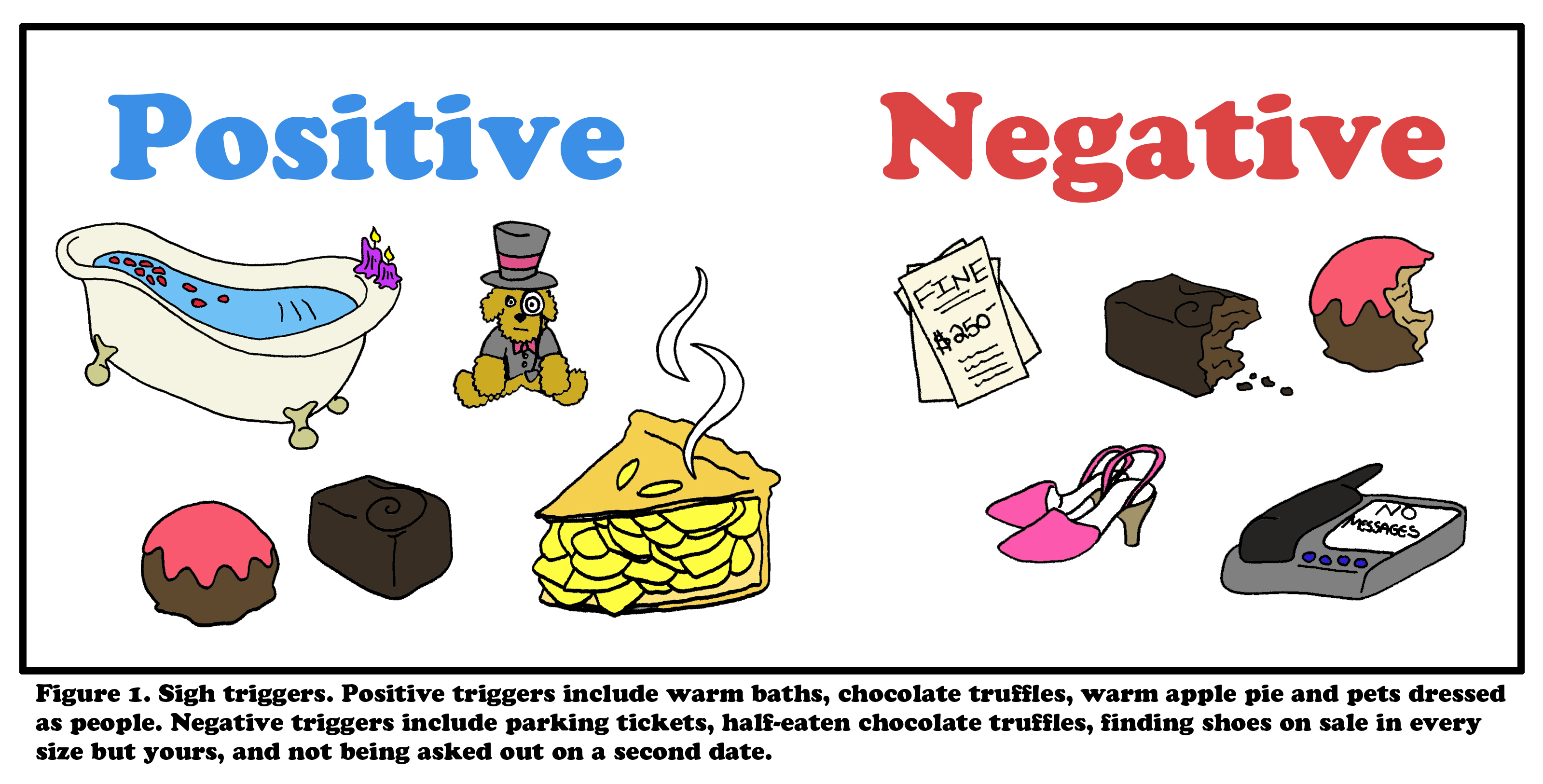
When you feel a sigh building, don’t release it right away. As Madeleine suggests, let the sigh simmer for a while until it has reached maximum potency. This typically takes 10-15 seconds. During this time, focus on the triggering emotion with a constipating intensity and try to infuse the sigh with as much positive/negative energy as possible. When the sigh is ready, release it slowly through the lips with an exaggerated hunching of the shoulders. If you feel like you’re suffocating or if you start turning blue, then you’ve held onto the sigh for too long.
If, on the other hand, you are more histrionic and are using the sigh as a statement or dramatic interjection, then you’ll need to throw in a few more twists. Pout your lips. Rolls your eyes and throw your hands down emphatically. Grunt a little, or yelp when you exhale. And when you sigh, do so forcefully – very forcefully, like you’re trying to blow up a balloon. A balloon full of hot, angry, vengeful air.
If on the other hand you find yourself lacking enough emotional variation in your life to trigger a healthy sigh but want to practice, then here are a few tips:
5 Ways to Strengthen Your Sighs
1) Watch the Lifetime network
2) Surround yourself by pictures of very attractive people
3) Have your dreams destroyed by a smartly dressed father-figure
4) Become a Chicago Cubs fan
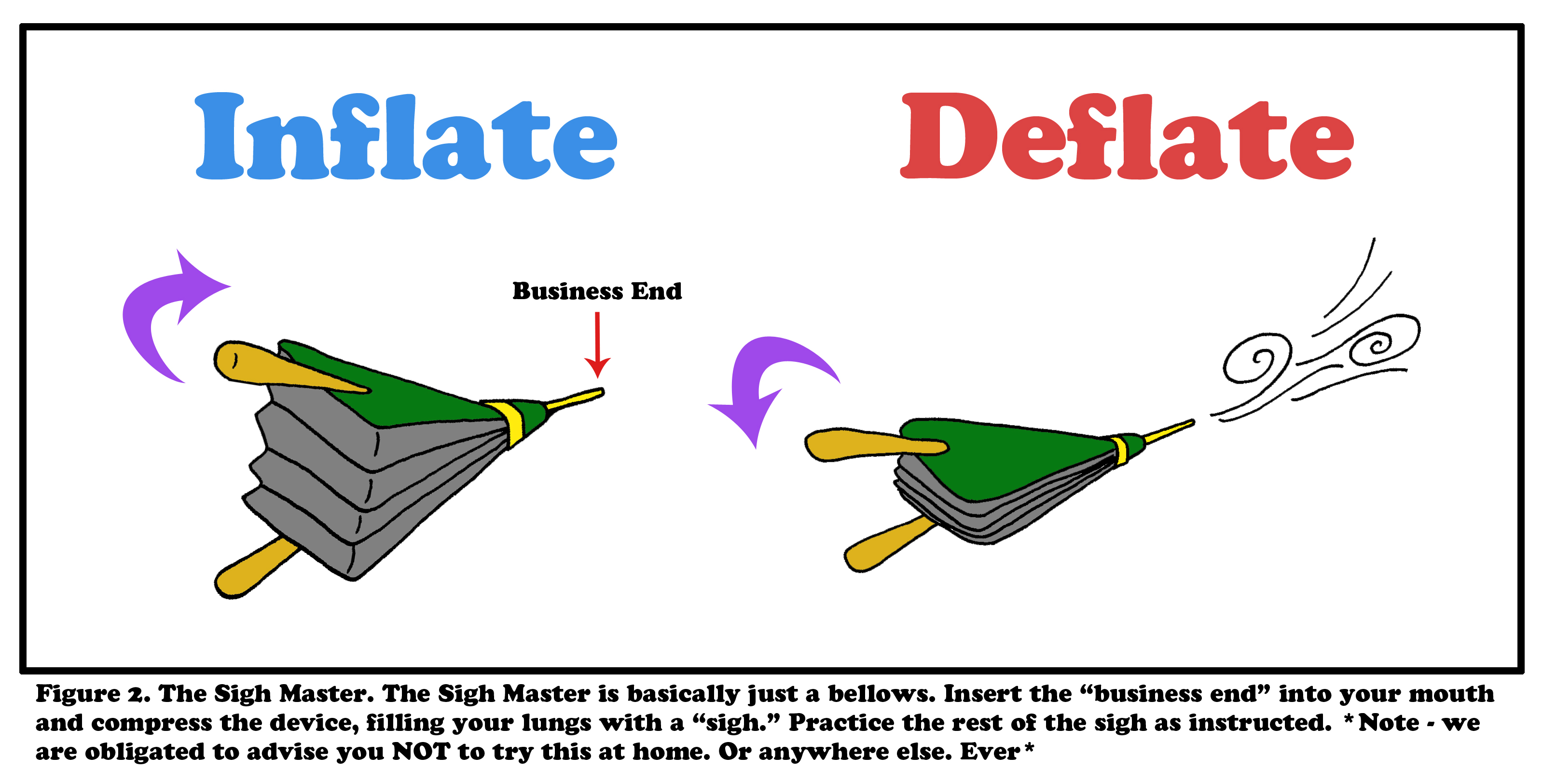
5) Buy and use a Sigh Master (see figure 2)
 One Man's Guide To...