Trick-or-Treating
Halloween is the greatest holiday ever invented. This is a fact. Ask your congressman. It’s the one publicly accepted day of the year when children can dream of being socially productive astronauts and princesses and spiderpeoples and adults can dream of being children. It is, after all, the most American holiday on the market – more American than Independence Day and Arbor Day and Canada Day combined. “Be free” it seems to say. “I am Halloween. Be whatever you want to be – just make sure people will see and hear you coming.”
And yes, it’s also a Freudian minefield – but we’ll save that discussion for another time. Today’s guide is not about the psychological implications of your sexy nurse-plumber-zombie-borat costume but about the time-honored tradition of trick-or-treating, a thing itself so American that it actually originated in Britain.
Known then as “souling” or “guising,” trick-or-treating involves dressing up in costume and going door-to-door asking for candy or organically grown, razor-blade free apples (pesticides do horrible things to fruits). Traditionally, children had to work for their treats – by singing or dancing or performing puppetry – but 20th century child extortion laws put an end to this reliable form of entertainment. Now all that is required is a costume. And sometimes just a bucket.
The adult in trick-or-treating typically acts as a chaperone, although even this is beginning to change with time. Every year the World Halloween Association Team receives thousands of complaints about adults participating in what is clearly a child-only activity, but the thought that trick-or-treating is reserved only for children is a common misconception. Adults may also participate, but there are slightly more stringent rules that must be obeyed if you, the adult, want a treat. According to Nelson Hickelworth’s 1941 Hallowe’en Guidelines:
“Whereas a child need only be cute or made ‘more interesting’ in appearance by the judicious application of costume, this alone is not sufficient for adults. The adult must not be violent or profane. The adult must not smell of alcohol or vagrancy. The adult must not attempt to take more than one treat or push a child aside to obtain a higher quality treat. The adult must not introduce foreign creatures – including the louse or bed bug – into the household. If the adult fails to abide by any of these rules, it is well within the treat giver’s right to withhold the treat and/or slap the offender, who is likely a Fascist.”
While some aspects of Hickelworth’s guidelines – like slapping the offender – are dated, the concept of “higher quality treats” is still very relevant. There is a clear quality gradation to Halloween treats – and you would be wise to study the Trick-or-Treat Quality Guide prior to your outing (see Figure 1).
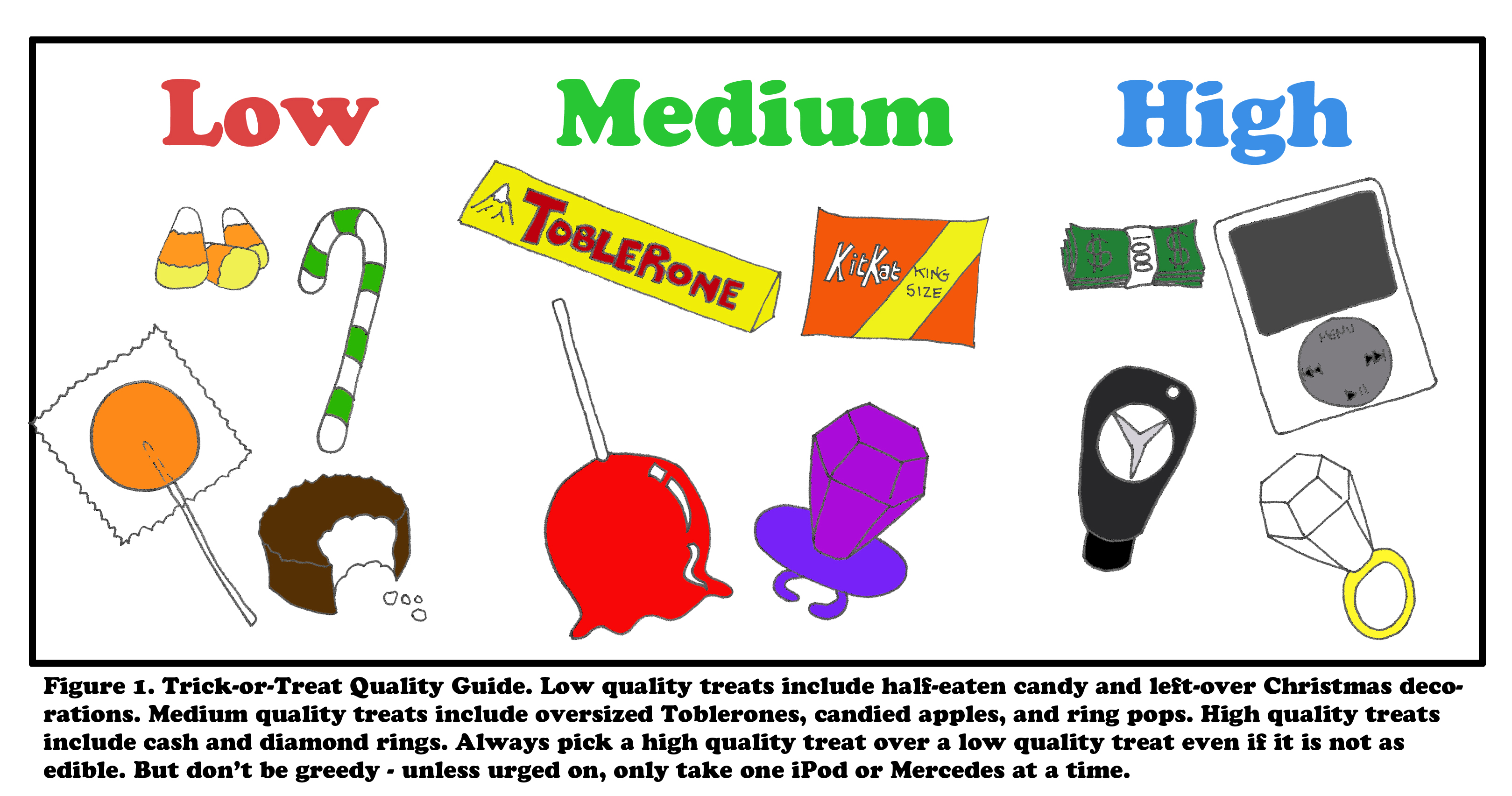
The entire purpose of trick-or-treating is not to have fun, but to walk away with the greatest number of high quality treats. If all you have to show for a Halloween night is a bucket of Nerds and Tic Tacs, then you should go back to the drawing board and seriously reconsider your approach for next year. Professional trick-or-treaters have been known to map out their routes weeks in advance, studying candy-buying habits and rummaging through garbage cans for grocery store receipts days before the big night. Some will even drive to wealthy neighborhoods looking for the “big score,” a risky move that should under no circumstance be attempted by amateurs. If you’re an adult acting as a chaperone, then you should try to instill this kind of work ethic and intensity in your children. They will thank you in the future when they are happy because of money.
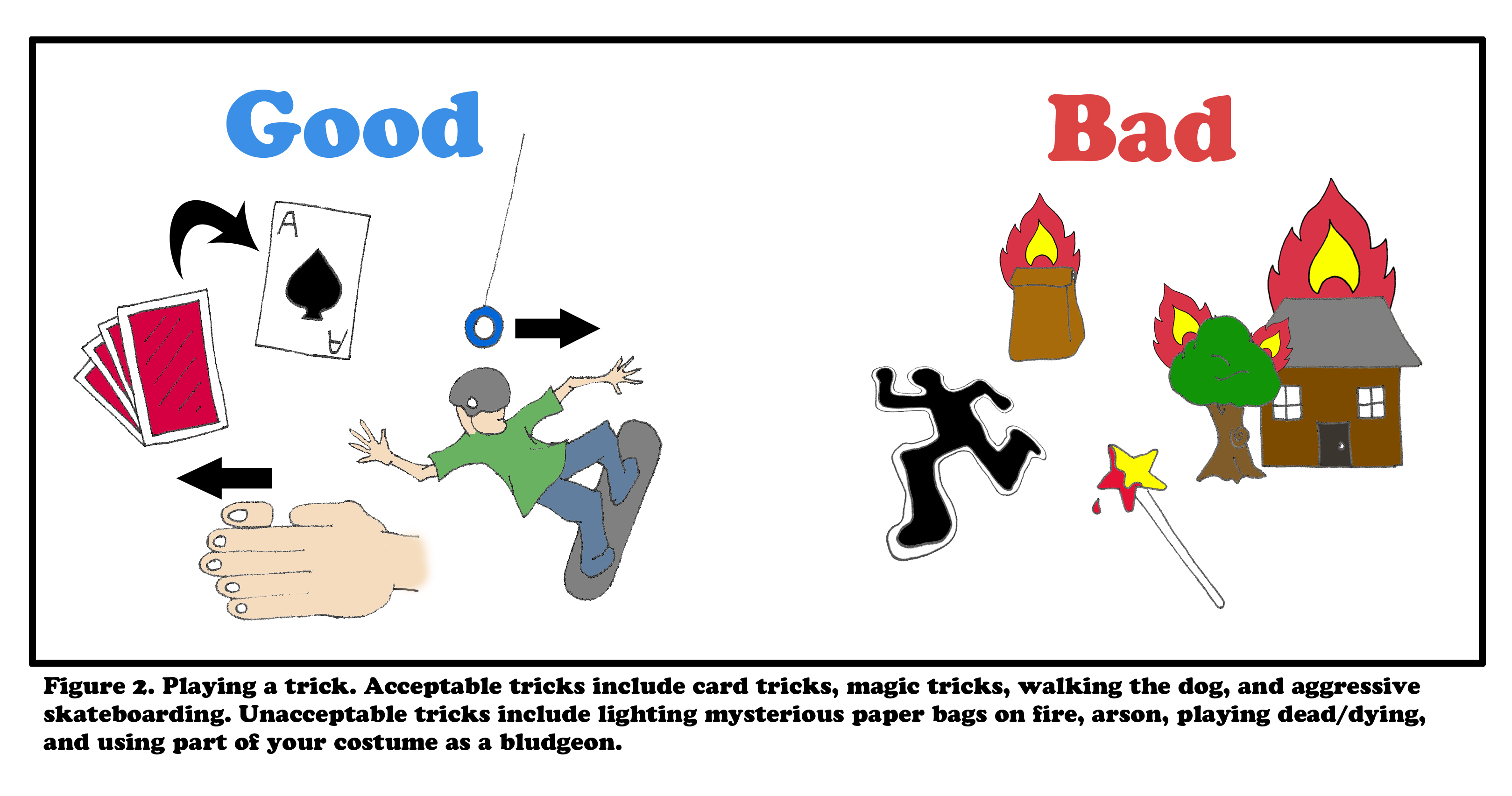
Sadly, based on modern trends, trick-or-treating is only realizing half of its holiday potential. The entire concept of trick-or-treating involves going door-to-door asking for a treat – but if no treat is given, or if the treat is a toothbrush, then you are expected to perform a trick. Be creative! Don’t walk away sullen and dejected – this would be a wasted opportunity. Do something to correct the injustice and ensure either a better treat next year, or a new neighbor entirely (see figure 2).
Happy Halloween!
 One Man's Guide To...