Basic Grilling
Few things are as distinctly and unmistakably American as backyard grilling. Baseball is one. The American flag is another. American cheese, I suppose, is a third. Perhaps American football. And American Ford trucks. And the American language. But grilling in your backyard – gathering a group of friends together with a select number of highly flammable liquids like lighter fluid and beer and throwing raw meet and occasionally raw vegetables BUT NEVER TOFU on a hot metal grill and grilling? Well, that’s just about as American as it gets.
So on this Fourth of July weekend 2010, it’s only appropriate that we discuss the basic art of grilling. And it is – by all means – an art. Because a true grill master – someone genuinely adept at grilling meat – can turn your ordinary cut of ribeye or sirloin into something beautiful. Something almost divine.
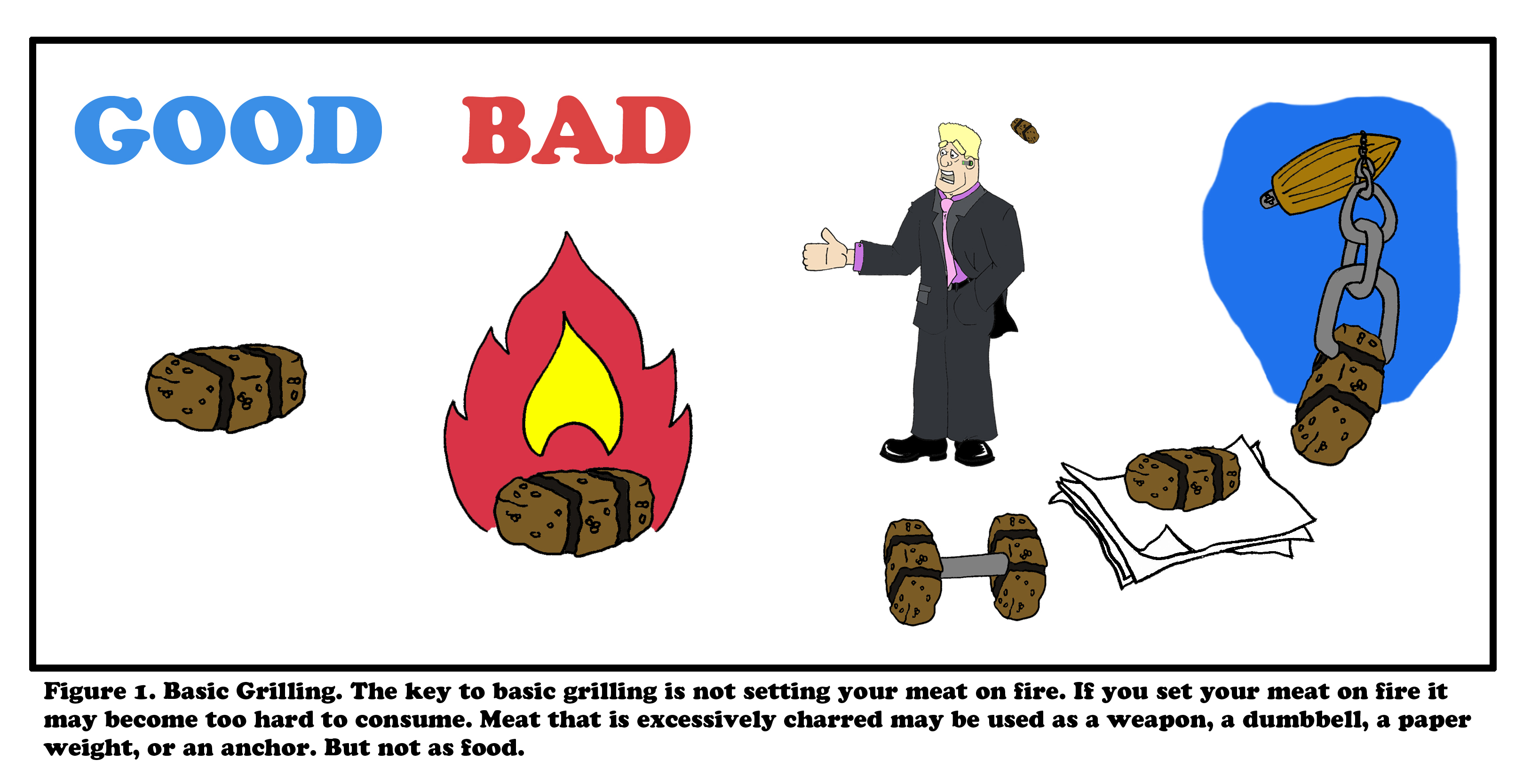
I, unfortunately, am no grill master – but I do know the basics. The key to grilling is not setting your meat on fire (see Figure 1). If you set your meat on fire, the likelihood of severe and irreversible charring rises exponentially. This will make your meat extremely well done and have the consistency of a discus or a curling stone – and it’s a well-known fact that two out of five dentists advise against biting into curling stones. Eating a large amount of charred meat on a consistent basis may also lead to an increase in heterocyclic amines, which could in turn lead to horrible things like pancreatic cancer and a mistrust of the elderly.
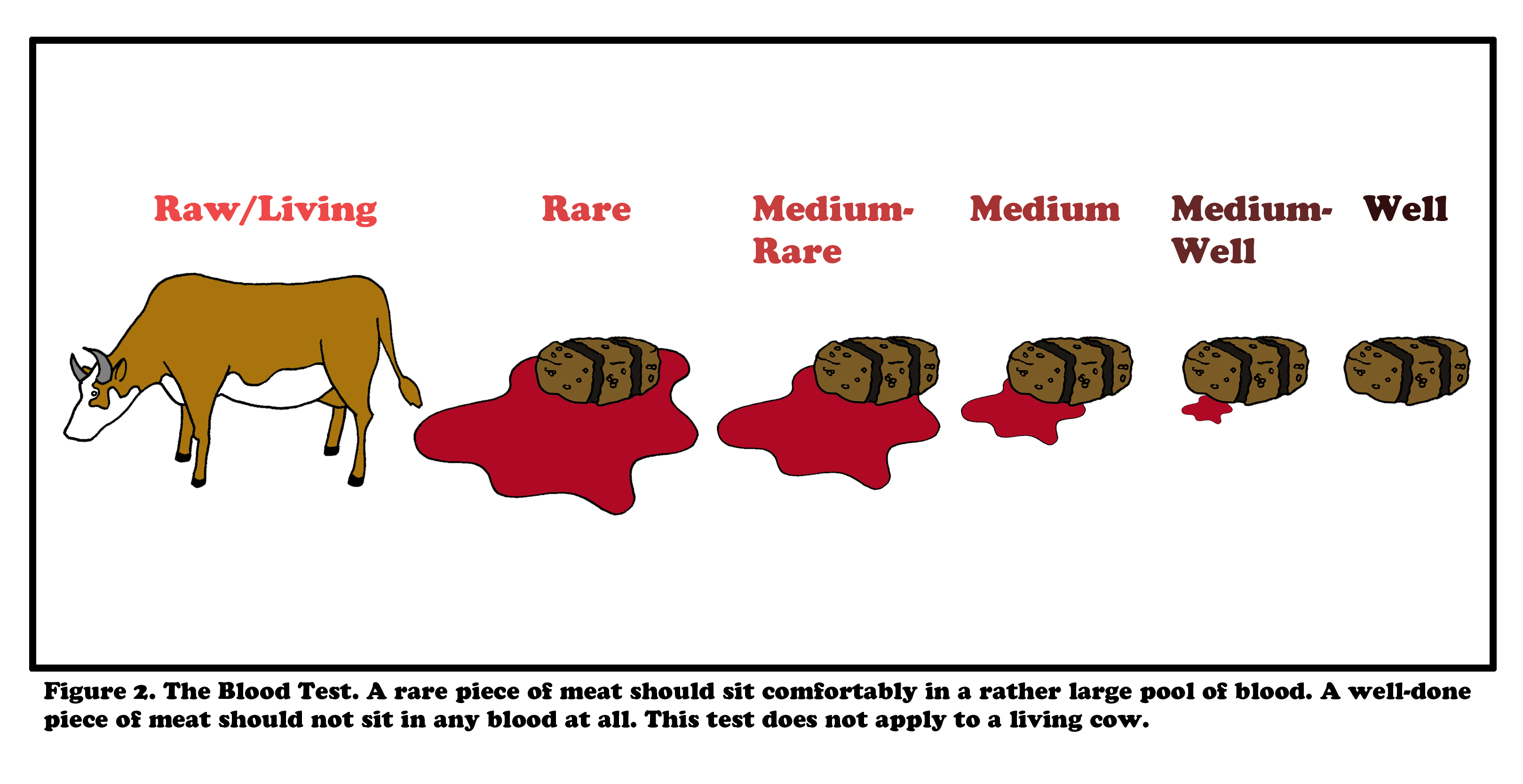
Depending on your taste and preference, you may decide to grill your meat on the bloodier end of the spectrum. Some people swear by the “clenched fist” method of judging a steak – ie a well-done steak has the give and tension of the muscle between your thumb and forefinger in a tightly clenched fist, whereas a rare steak has the give of a loosely clenched fist. I, however, prefer the blood test (see Figure 2). For example, a rare steak should sit in a large pool of blood after grilling whereas a well-done steak should sit in no blood at all. One note of caution, though: if you are using a steak knife to test the “clenched fist” method, do not stick the knife into your thumb or you may inadvertently switch over to the blood test method.
Now since this is just a basic tutorial on grilling, we won’t address more complicated issues like meat preparation and BBQ techniques and grill selection at this time. But because of potential safety concerns, we should briefly illustrate the proper tools required for grilling (see Figure 3).
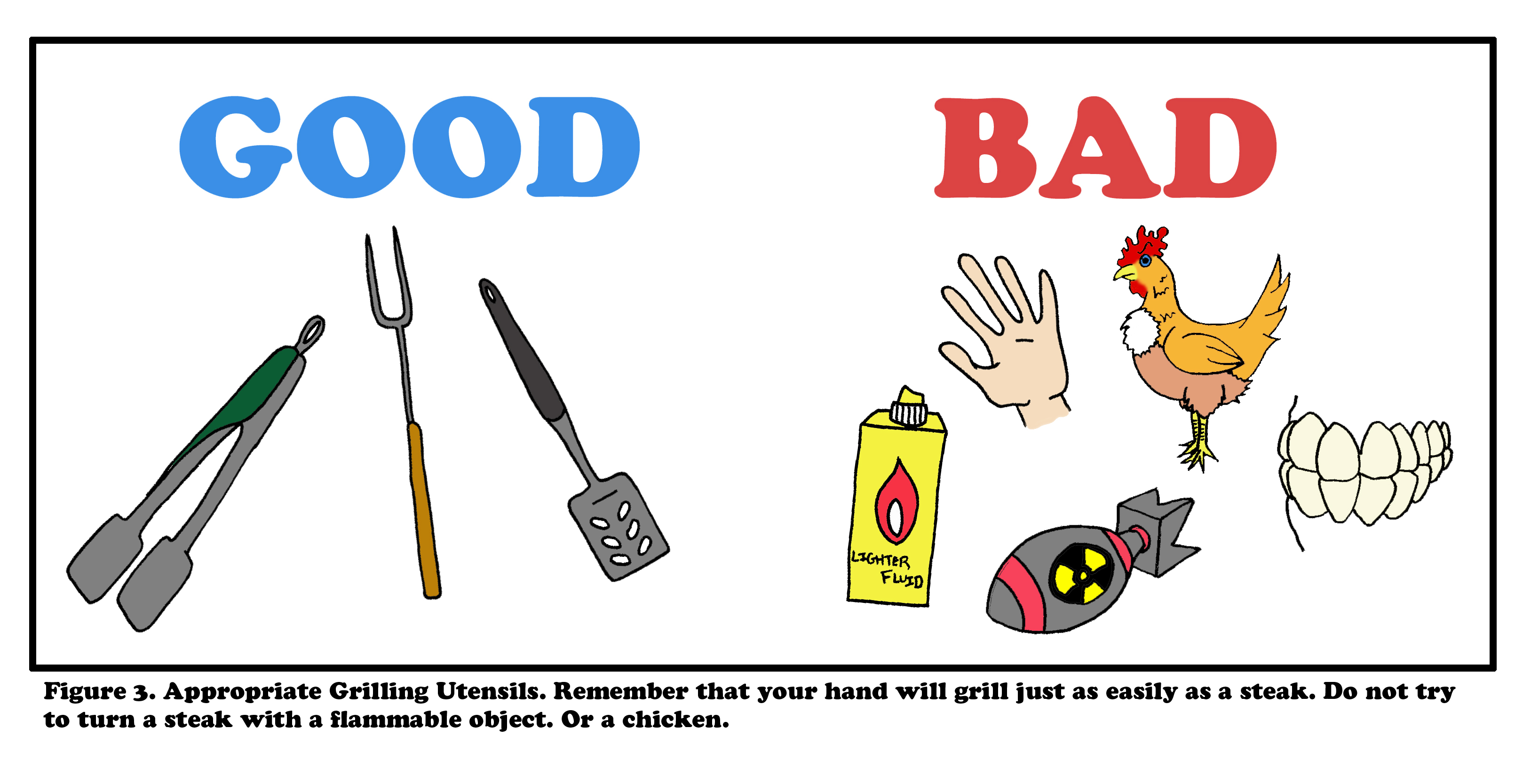
Always remember that your hand – or any human flesh for that matter – is basically meat, and if you set your hand on a hot grill it will grill. Do not do this. Instead, be safe! And drink responsibly and don’t blow your arm off with a homemade mortar/firecracker.
And have a happy Fourth of July!
 One Man's Guide To...