Buying a Bottle of Wine
The grape is a tremendously versatile fruit. It has given us so many wonderful things – things like grape juice and grape soda and Grape-Nuts and grapples and grapefruit. And it asks for nothing in return, this tiny seeded or seedless entity – mostly because it’s a fruit and doesn’t have the power of speech.
But perhaps the grape’s most sobering contribution to the world is wine. In an utterly barbaric process, grapes are gathered together and brutally crushed and made to rot with yeast in steel vats or wooden barrels for weeks on end until, through some magical process that has something to do with chemistry or physics or English literature, wine is made.
This is all well and good, except for the fact that there are so many varieties of wine. And yes – there are experts with discerning palates who can place a wine by taste and smell to a specific hillside on a specific vineyard in a specific year. But for those of you who can’t tell the difference between a 1997 and a 2000 bottle of Stag’s Leap Cask 23 Cabernet Sauvignon and couldn’t care less, buying a bottle of wine can be very intimidating. And this guide would be for you.
Wine comes in two colors: red and white. If you’ve bought a bottle of blue or gold liquid, this is probably something else entirely – something like Gatorade, or beer, or an elixir/potion. Don’t take this step lightly – correctly identifying a bottle of wine is 67% of the wine buying process (see Figure 1).
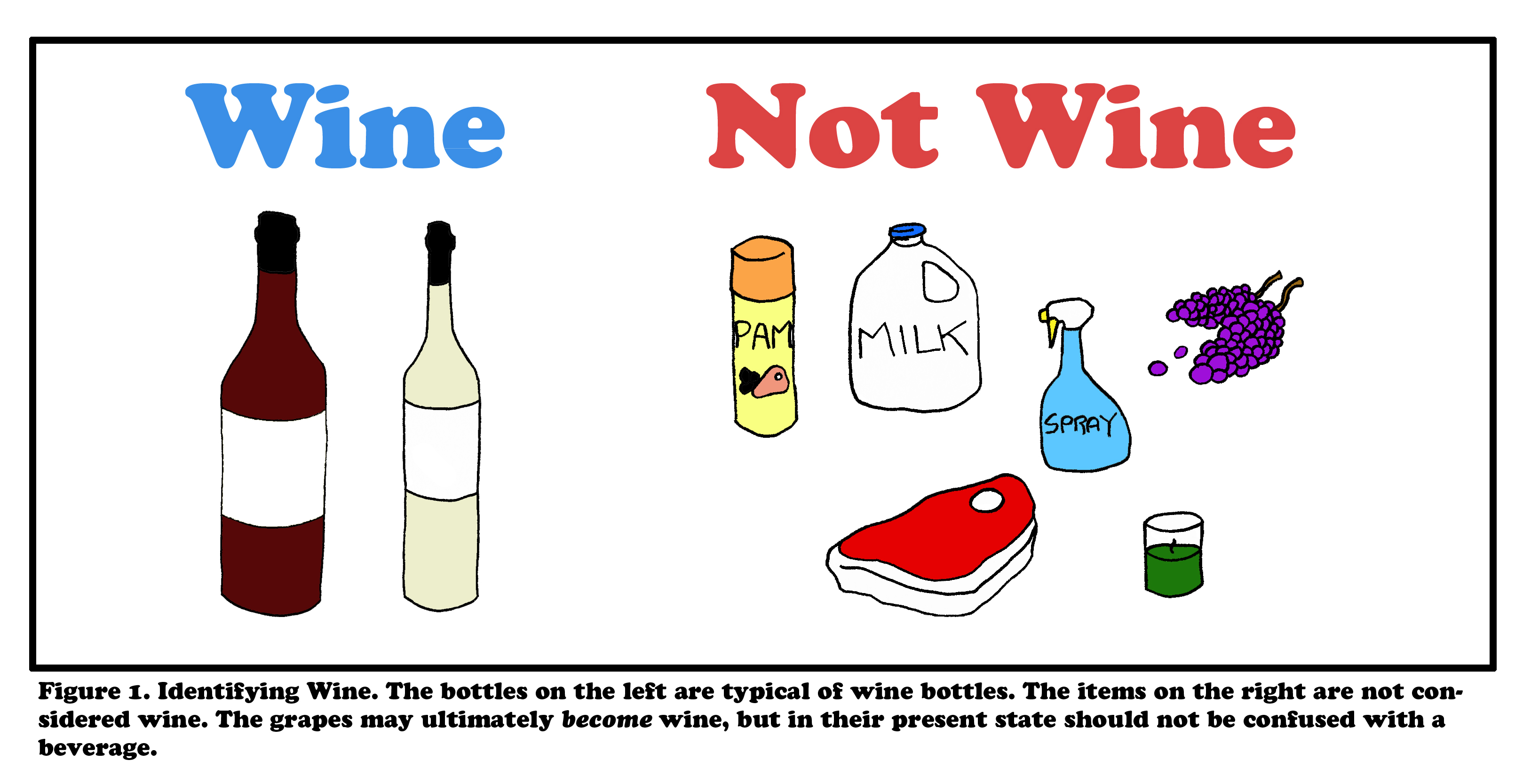
If you’re looking at a number of bottles, bear in mind that wine typically comes in large, 750ml bottles – smaller bottles are typically reserved for sauces and cleaning products. And as a general rule of thumb, always stay away from wine in a box – it’s either a bad idea, will become a bad idea, or is grape juice. If after all of this you’re still confused, ask a store attendant if you are standing in the “wine aisle” – standing in the wine aisle when choosing your bottle of wine significantly increases your chance of choosing a bottle of wine.
Once confident that what you’re looking at is – in fact – wine, you can then begin the selection process. A very basic starting point is to know your audience: buying a bottle of wine for a casual party or a group of friends is very different from buying a bottle for a post-Candide wine tasting party with local titans of industry. Knowing your audience will help direct you toward a price range – a bottle of Two-Buck Chuck will probably have the same effect on your friends as a $250 bottle of Merlot.
“Ok, so I’ve narrowed down my price range – what next?” you ask. A not entirely unreasonable question.
One method of selecting wine is to close your eyes and spin around in a circle and point – this is similar to the dartboard approach to college applications. The risk of this approach is that you could very easily land on a bottle outside of your price range and be forced to buy, out of commitment to your methodology, a very expensive bottle of wine. An alternative approach is to buy a bottle from somewhere you’ve always wanted to visit. For example, you might buy a bottle of Chilean wine because you’ve always wanted to go to Chile, and by drinking wine from that region you would have effectively embarked on a vacation in your mouth. Another option is to select a wine that is fun to pronounce or would sound exotic when used in a mad lib: Syrah and Malbec, for example.
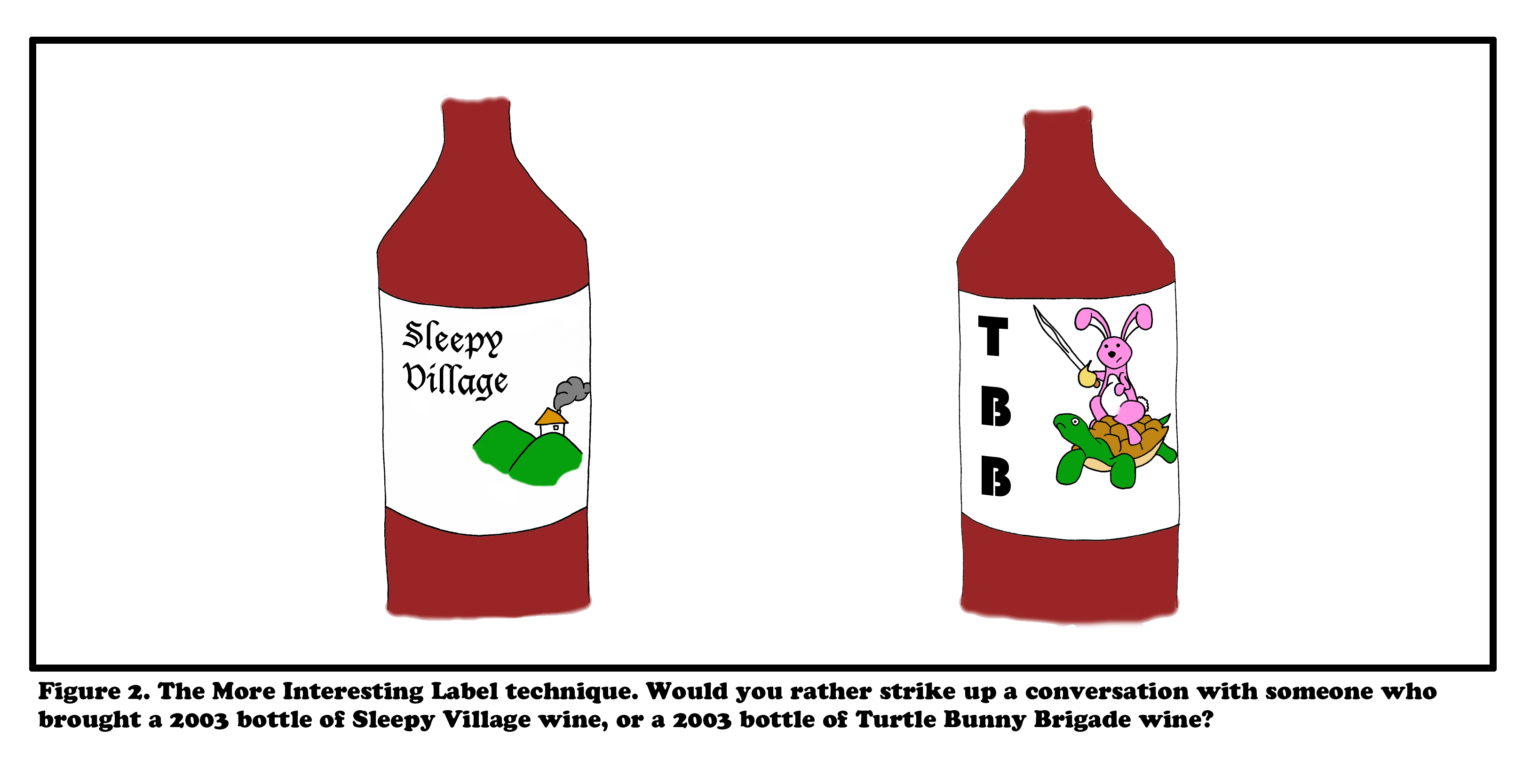
But easily the best and most effective way to select a bottle of wine is to pick one with a really awesome label. Chuck Summers of Wine Ecstatic Magazine wrote in his 2002 article Stop Wine-ing:
“I once bought a bottle of wine because it had a puppy with wings on the label. Best damn bottle of wine I’ve ever had. It made me more popular with women.”
Buying a bottle of wine often says as much about you as it does about the wine (see Figure 2). This is known as the More Interesting Label technique of wine buying. Bear this in mind, especially if you’re single or trying to meet new friends or nervous about your lack of wine knowledge.
 One Man's Guide To...