 by
by There may come a time in your life when you’ll feel the irrepressible need to make a stand – when you’ll want to put your foot down and say enough of this madness!
The need may come over you suddenly – it may take you by surprise, wash over you like a blush of the skin only to pass with a shiver of self-consciousness. Or it may seize you like a violent fever, boiling your senses and shaking your bones until you find yourself – half crazed and mad – banging on the wall, howling like a banshee for your neighbor to “TURN OFF THE MUSIC IT’S 3 IN THE $#&%!*@ MORNING!”
It’s a terrifying experience. Small children in the area will suffer irreversible psychological trauma. Elderly bystanders may not survive the ordeal. Domesticated pets will run for the wild.
But it’s often a necessary part of life – verbalizing one’s limits and limitations. To prevent the uncontrollable outburst and reduce unnecessary trips to the emergency room, it may be useful to communicate your concerns beforehand by doing something called drawing the line.
But before we go over the specifics of drawing the line – and because it’ll help clarify the above concept – let’s first go over how to draw a line. Drawing a line is straightforward (see Figure 1). Take a pen or pencil in hand, press the tip onto paper, and drag your hand across in one fluid, level stroke. If you like, you may use a ruler. Or a T-square.
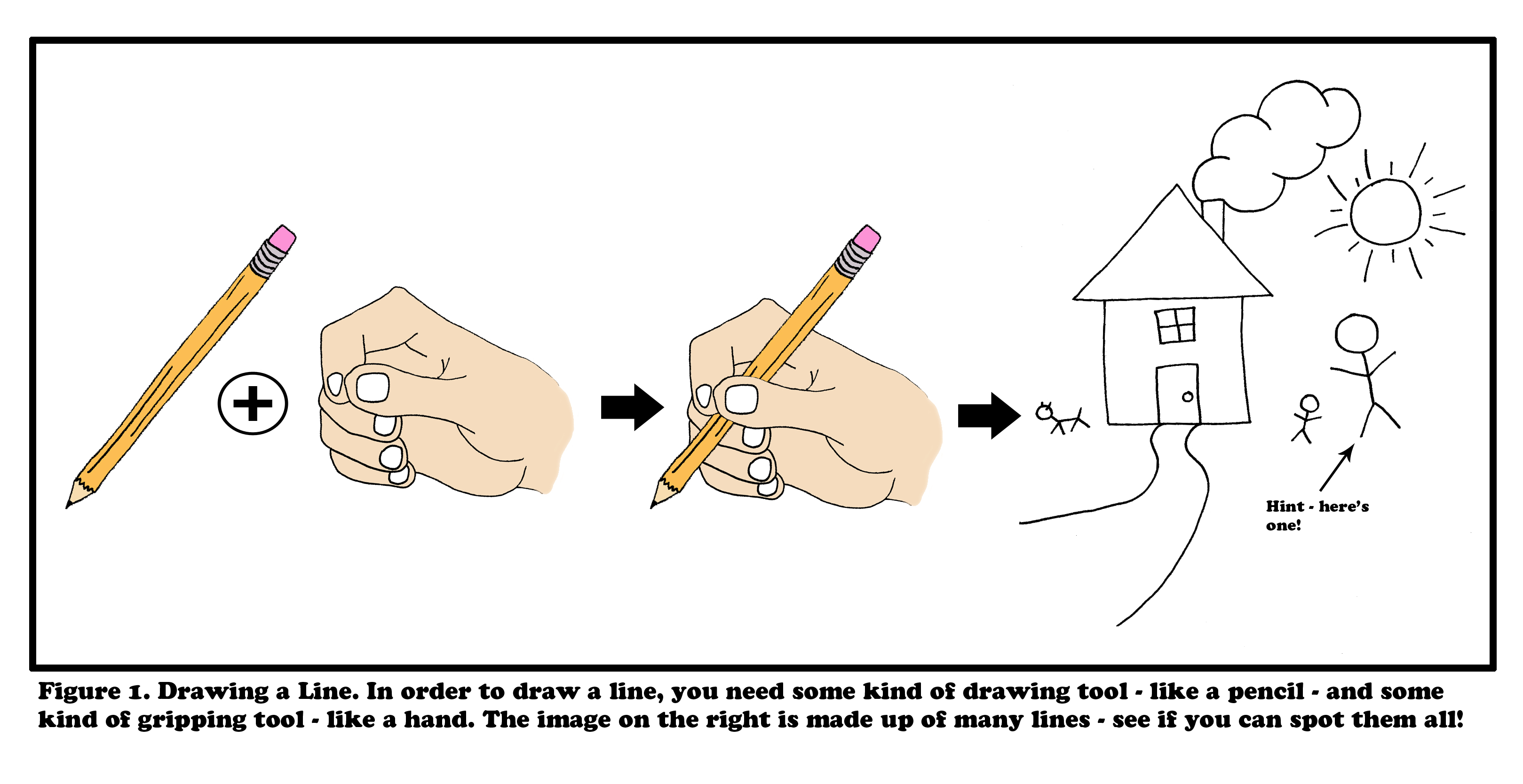
What you have just done is drawn a line. The line is the foundation – the building block – of every drawing and painting, every sketch and doodle. The line may be straight, crooked, curved or dotted. Bigger pictures are literally composed of hundreds to thousands of smaller lines arranged in any number of configurations.
Drawing the line, on the other hand, is a figure of speech. When used appropriately, it signifies a breaking point – the boundary, if you will, of your composure. If the line that you have drawn is crossed, then you may no longer be held accountable for your actions (except in a court of law).
There are many ways in which you could draw the line (see Figure 2). Traditionally, drawing the line actually involved drawing a line – for example, a general would draw a line in the dirt with a sword or a large stick. He would then make some grandiose speech about what the line signified, and anyone left standing on his side of the line was in support of his cause while anyone on the other side of the line was hanged.
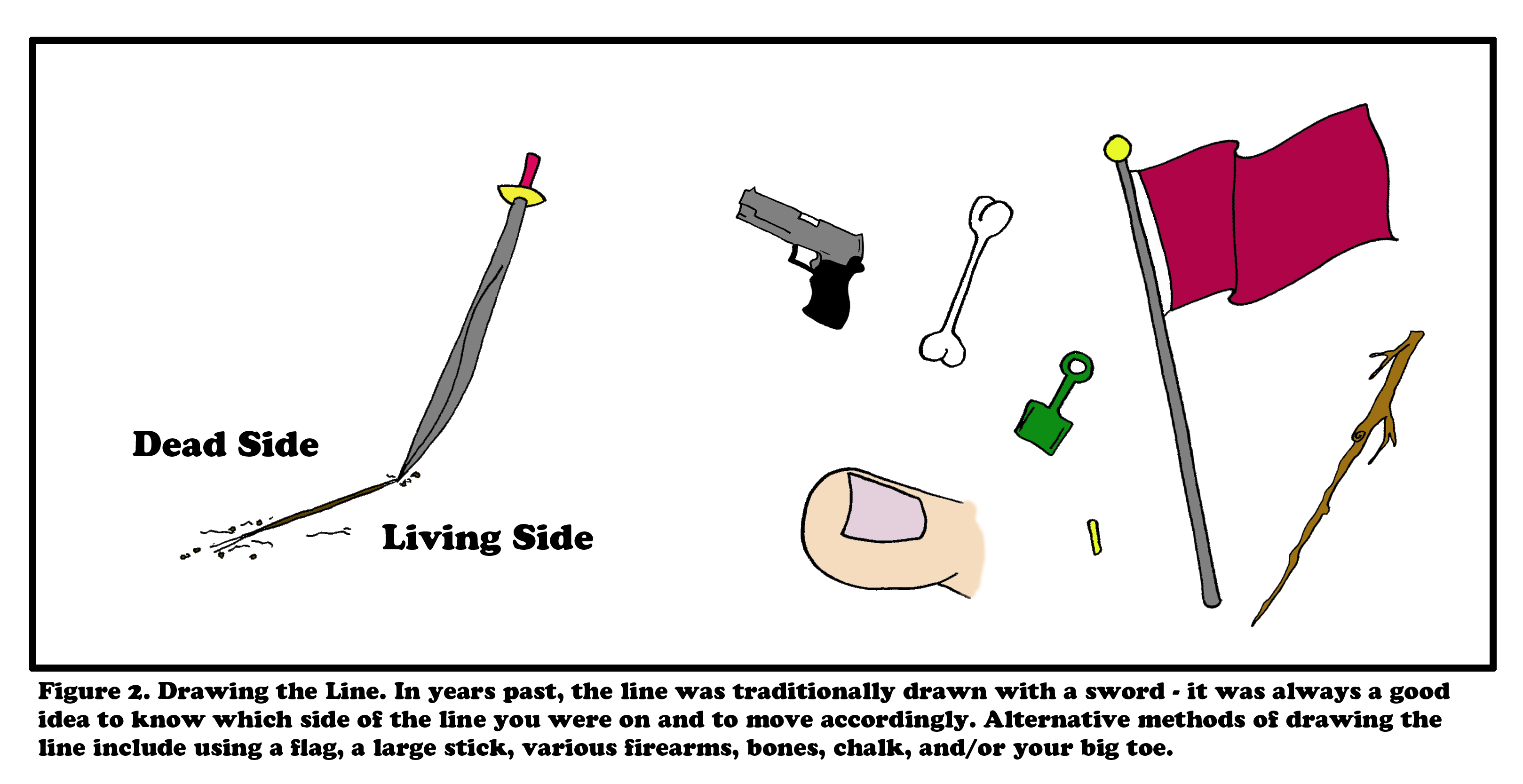
Today – mostly because roads are paved and large sticks are hard to come by in a city – simply saying “I draw the line at…” or “this is where I draw the line” will usually get the point across. For example, saying “I draw the line at 80’s music” effectively means “I will not tolerate 80’s music and you will have to live with the consequences of subjecting me to 80’s music which could be anything at all.” For emphasis, you may gesture with a chopping motion of the hand or point violently. This maneuver serves to intimidate your audience, and gives a preview of the physical consequences of crossing the line.
The thing to remember is that – as with drawing a line – drawing the line should be as simple and straightforward as possible. If you draw too many figurative lines, then you’ll start to form a bigger picture – and before long people will think you’re trying to pass personal legislation or run for public office. This will make you intolerable to others, and you’ll start to find people drawing the line at you.
But subtly drawing the line in friendly conversation is a benign and usually effective way of announcing the limits of your social integrity, and by making others aware of your limits may reduce the number of violent outbursts and psychological traumas/untimely deaths.
Just don’t cross the drawing the line line.
 One Man's Guide To...
those chefs in Nina’s workplace could take a lesson in drawying lines. It might eliminate a couple of team meetings when people slash each other to work out issues Maybe Nina should present the head chef with a sword to draw lines with.
just a small note of warning …i’ve witnessed the actual drawing of the line with the stick in the dirt during a mildly heated roadside trafic altercation, the drawer of the line is in no means entitled to imunity from physical harm from the drawee and should be aware that some lines will be crossed ..the drawer in this case was by the look of fear and shock on his face made this fatal mistake and naturaly assumed he would somehow be magicly protected behind it after being respectably thumped i belive he has since drawn the line on drawing the line? i cant wit for some more, love this site …you help put the der-da-der in the fast lane
thanks for the support, Jamie!